Funicular update (checked 19 October 2026): The Orvieto funicular has been suspended since 9 June 2026 for extraordinary maintenance, and no reopening date has been set. Busitalia runs a replacement shuttle bus in both directions between Piazza Matteotti (Orvieto railway station) and Piazza Cahen: Monday to Saturday the first bus leaves at 7:10, then every 10 minutes from 7:30 to 20:30; on Sundays and public holidays buses run every 15 minutes from 8:00 to 20:30. Full details are in our Orvieto funicular and shuttle guide.
Orvieto, perched high on a volcanic rock in Umbria, offers a mesmerizing blend of rich history, stunning architecture, and delicious cuisine. This 3-day itinerary guides you through the must-visit attractions, including the magnificent Duomo, ancient underground tunnels, and local eateries full of authentic Umbrian flavors. Whether you are exploring Gothic chapels, chasing truffle-laced pasta, or watching the sunset from the medieval walls, this guide will help you maximize every hour in one of central Italy's most rewarding towns in 2026. Enhance your Rome experience with our Rome itinerary. Design your dream vacation using our Rome itinerary.
Key Takeaways
Turn this guide into a personal route with our free Orvieto itinerary planner.
- Day 1: Visit the stunning Orvieto Cathedral, climb the Torre del Moro for panoramic views, and explore the Piazza del Duomo — end the evening with dinner in the centro storico.
- Day 2: Tour the Orvieto Underground in the morning, descend Pozzo di San Patrizio, and spend the afternoon at the Museo Claudio Faina to learn about Orvieto's Etruscan past.
- Day 3: Take a half-day side trip to Civita di Bagnoregio or the Orvieto wine country, then close with a farewell dinner featuring Orvieto Classico white wine.
- Transit tip: The train from Rome Termini takes roughly 70–95 minutes to Orvieto station, depending on the service. From there, take the replacement shuttle bus up to Piazza Cahen while the funicular is suspended (every 10–15 minutes until 20:30); once it reopens, the funicular (€1.30 single) lifts you about 157 m in around 2 minutes.
- Book the Orvieto Underground tour and Pozzo di San Patrizio tickets online at least a day ahead — both sell out during high season.
Explore Orvieto like a pro with these guides
- How Many Days Do You Need to See Rome? - Get inspired for your journey
- Verona Itinerary: Unforgettable Adventures in 2026 - See it all with our guide
- Brescia Itinerary: Discover Italy's Hidden Gem in 2026 - Organize your journey
Getting to Orvieto and Around Town
Orvieto sits roughly 100 km north of Rome, making it an easy destination by rail. Direct Trenitalia Regionale Veloce and Intercity trains from Roma Termini take about 75–90 minutes, but departures are unevenly spaced through the day, so choose yours on trenitalia.com before you travel; a regional ticket costs €10.10 each way. If you are traveling from Florence, the journey takes approximately 2 hours with a change at Chiusi-Chianciano Terme. By car, Orvieto is right off the A1 autostrada at the Orvieto exit, with paid car parks at the base of the cliff, near Piazza Cahen at the top, and at Campo della Fiera (€1.50 per hour), which connects to the centre by escalators and a lift.
The town's greatest quirk is its verticality. Orvieto station sits on the valley floor, about 157 metres below the old city. The funicular normally covers that gap in around 2 minutes, but it has been suspended since 9 June 2026; until it reopens, a replacement shuttle bus runs between Piazza Matteotti outside the station and Piazza Cahen, Monday to Saturday from 7:10 and then every 10 minutes from 7:30 to 20:30, and every 15 minutes from 8:00 to 20:30 on Sundays and holidays. The funicular keeps the same frequencies when it returns, for €1.30 single; Trenitalia sells it only as part of its integrated Orvieto Link ticket, so collect the magnetic pass that opens the gates at the station ticket office before boarding (and again for the return). At the top, you connect to the electric minibuses that serve the otherwise car-restricted centro storico: Line A runs from Piazza Cahen to Piazza del Duomo, and Line 1 links the station with Piazza Cahen and Pozzo di San Patrizio. The shuttle (or funicular) and bus network together mean you rarely need a taxi, except after the last departure at 20:30 or if you are staying outside the walls.
Combo tickets are worth buying on arrival. The Carta Unica (the card this guide also calls the Orvieto Unica Card) costs €35 full price, €25 reduced, and is free for children under 10; it is valid for a year. It covers the Duomo with the Cappella di San Brizio, Pozzo di San Patrizio, the Orvieto Underground, the Museo Claudio Faina, the Torre del Moro, the Labirinto di Adriano, the Pozzo della Cava and the Crocifisso del Tufo necropolis. The funicular is not part of the standard card, though a combined Carta Unica plus funicular ticket exists for visitors arriving at Orvieto Scalo. Buy it online at cartaunica.it or at the sales points in Piazza Duomo and Piazza Cahen. If you only plan to visit one or two sites, individual tickets will likely work out cheaper; add up the sites you actually plan to enter and compare.
Within the old town, the main street Corso Cavour runs east-west and connects the funicular top station to the Duomo in about a 15-minute walk. The streets are cobblestoned and moderately hilly — flat-soled walking shoes are essential. If you are arriving by train and heading straight up before checking in, ask your hotel about luggage storage, or check at the station for left-luggage options.
Day 1: Explore the Heart of Orvieto
Welcome to your first day in Orvieto, where this Orvieto itinerary 3 days adventure begins. The first morning is best spent at the Duomo before tour groups arrive, leaving the afternoon for the hilltop's civic landmarks and the evening for a proper sit-down dinner. Find the perfect place to stay with our Rome accommodation guide.
Start at 09:00 at the Orvieto Cathedral (Duomo di Orvieto). The polychrome marble facade, covered in golden mosaics and bas-reliefs, is one of the most photographed sights in Italy for good reason — it genuinely shocks you up close. A single €8 ticket covers the Duomo, the Cappella di San Brizio, the Emilio Greco Museum, the Cathedral Underground and an audio guide, and can be bought online or at the ticket office at Piazza del Duomo 25 (the Opera del Duomo lists free entry for children up to 11 and some other categories). Inside, spend at least 45 minutes in the Cappella di San Brizio, where Luca Signorelli's Last Judgment frescoes cover every centimetre of wall and ceiling. The cycle was completed in 1499–1504, before Michelangelo's Sistine Chapel work, and is often said to have influenced it; it is widely regarded as one of the great fresco programs of the Italian Renaissance (for broader art coverage, see The Guardian's art desk).
After the Duomo, head three minutes on foot to the Torre del Moro on Corso Cavour. The 13th-century tower is climbable for €3.80 (reduced €3.00); it opens 10:30–16:30 from October to February and 10:00–18:00 in April, May and September, with a 13:00–15:00 break in summer. The 360-degree view from the top — tuff cliffs, vine-threaded valleys, and the Duomo's glinting facade — is the best in the city. Allow 30 minutes. A lift reaches only the first level; the rest is a climb of around 236 stairs, so this is worth doing before midday heat sets in.
At 12:30, have lunch. Trattoria del Moro Aronne on Via San Leonardo is a reliable choice: strangozzi al tartufo (hand-rolled thick pasta with black truffle) runs about €14, and the house Orvieto Classico carafe is €6. Tables fill up fast — aim to arrive right at 12:30 to avoid a wait.
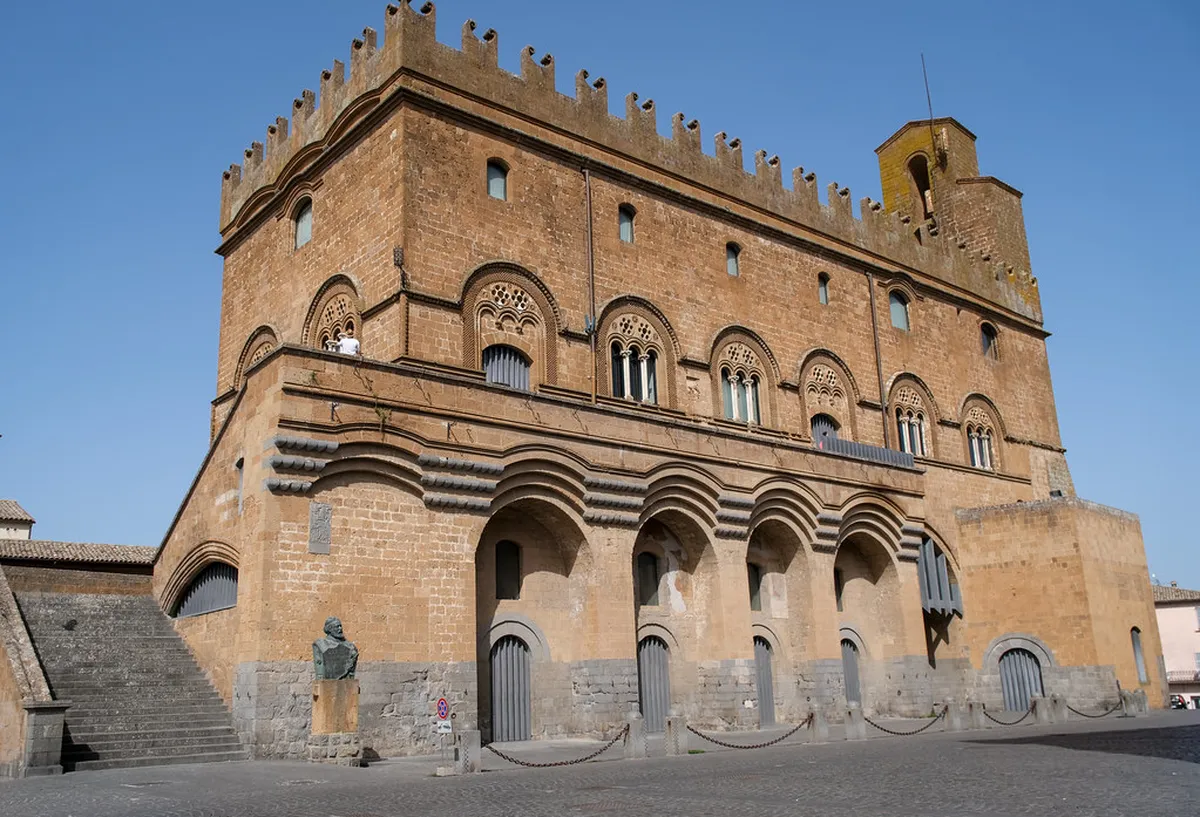
The afternoon belongs to the Palazzo del Popolo and the civic quarter around Piazza della Repubblica. The medieval building itself is closed to casual visitors but the piazza is the beating heart of daily Orvieto life, with a fruit-and-veg market most mornings and bar terraces open through the afternoon. From here, walk the perimeter walls toward the western Belvedere viewpoint for the late-afternoon light over the Umbrian plain.
In the evening, stroll back along Corso Cavour and try one of the enotecas for aperitivo hour (roughly 18:00–19:30). Cantina Foresi, just off the Duomo piazza at Piazza del Duomo 2, is one of the oldest wine shops in Orvieto and pours glasses from €3. For dinner, Osteria dell'Orso on Via della Misericordia serves Umbrian dishes at mid-range prices (mains €16–€22) with a short but well-chosen wine list. Book a table by phone or on their website for the 20:00 sitting during peak season.
| Time | Activity | Notes |
|---|---|---|
| 09:00 – 11:00 | Orvieto Cathedral + Cappella di San Brizio | Entry €8 (includes San Brizio); arrive early to beat tour groups |
| 11:00 – 11:30 | Torre del Moro | Entry €3.80; 360° views; ~236 stairs |
| 12:30 – 13:30 | Lunch at Trattoria del Moro Aronne | Strangozzi al tartufo ~€14 |
| 14:00 – 16:00 | Palazzo del Popolo & Piazza della Repubblica | Free; browse artisan shops on side streets |
| 16:00 – 17:30 | Belvedere walk along medieval walls | Best western light for photography |
| 18:00 – 19:30 | Aperitivo at Cantina Foresi | Wine from €3/glass; Piazza del Duomo 2 |
| 20:00 – 21:30 | Dinner at Osteria dell'Orso | Mains €16–€22; book ahead in peak season |
By the end of Day 1 you will have seen the cathedral that defines Orvieto, climbed its highest tower, tasted its signature pasta, and settled into the rhythm of the hilltop town. For more context on the broader region, see our Comprehensive Orvieto Itinerary.
Enhance your Orvieto experience with these resources
- Is 2 Days Enough Time in Rome? Maximize Your Trip! - Map out your exploration
- Como Itinerary: Explore the Best of Como in 2026 - Your trip, your way
- How Many Days Do You Need to See Rome, Italy? - Get inspired for your journey
Day 2: Discover Underground Orvieto and the Etruscan Heritage
Day 2 digs beneath the surface — literally. Orvieto sits on top of roughly 1,200 caves, tunnels, cisterns, and Etruscan-era chambers carved into the soft tufa rock over two millennia. The morning is underground; the afternoon is dedicated to the Etruscan and medieval museum collections that tell you what you just saw.
Spend the morning on the Orvieto Underground tour. The roughly one-hour guided tour departs from Piazza del Duomo 23 daily; the operator lists departures at 11:00, 12:15, 16:00 and 17:15, and recommends reserving by phone or email on weekends and in peak season. Tickets cost €10 (€8 reduced for students, over-65s and groups) at the ticket office at Piazza del Duomo 23, and the tour is included in the Carta Unica. The tour takes you through medieval oil-press chambers, Etruscan pigeon-breeding caves used to supplement winter food supplies, and a network of wells and cisterns that supplied the city. Temperature underground is a constant 14°C regardless of season — bring a light jacket even in summer.
After the 11:00 tour, walk 10 minutes east to Pozzo di San Patrizio (St Patrick's Well). Designed by Antonio da Sangallo the Younger for Pope Clement VII after the 1527 sack of Rome, the well is 53 metres deep and 13 metres wide, lined with a double-helix staircase of 248 steps — two interlocking spirals so descending donkeys and ascending ones never met. Entry is €6 (reduced €4.50) or covered by the Carta Unica. The well is open daily, with hours that vary by month: 10:00–17:00 in January, February, November and December; 09:00–19:00 in March, April, September and October; and 09:00–20:00 from May to August (last entry 30 minutes before closing). Allow 45 minutes to descend, pause at the bottom, and climb back up. The view from the outer parapet over the valley is worth the extra two minutes to find.
Lunch at 13:00 at La Palomba on Via Cipriano Manente — a family-run trattoria with no written menu, just what they cooked that morning. Expect two or three pasta options, a meat second course, and a carafe of house white for around €18–€25 total per person. This is a working lunch spot used by locals; it is one of the best-value meals in Orvieto.
The afternoon is at the Museo Claudio Faina e Civico, directly across the piazza from the Duomo. Entry is €7 (€5 reduced), or €3 extra on the Duomo combination ticket, and the museum opens daily, 9:30–18:00 from April to September and 10:00–17:00 from October to March. The two-floor museum houses one of Italy's finest private Etruscan collections, assembled by the Faina family from excavations around Orvieto's necropolis. Highlights include 6th-century BC Greek pottery that arrived via Etruscan trade routes, Etruscan gold jewelry, and a bronze helmet from the Cannicella sanctuary. The civic museum on the upper floors adds Roman-era finds from the same excavation sites. Allow 90 minutes. For additional reading on the Etruscan background, Britannica's Etruscan civilization entry is a useful primer.
By late afternoon, walk the eastern perimeter walls from Piazza Cahen toward the Crocifisso del Tufo Etruscan necropolis (ticketed and included in the Carta Unica; reduced ticket €2). The necropolis is a grid of 6th–4th century BC tomb chambers cut from the tuff just below the cliff edge, each inscribed with the family name above the doorway. Since 29 September 2025 the tomb area has been closed for redevelopment and accessibility works; only the Antiquarium is open, with a smart-glasses visit of the necropolis by reservation (tel. 0763 343611).
For dinner, head to Ristorante I Sette Consoli on Piazza Sant'Angelo 1a. It is one of Orvieto's best-regarded restaurants, with an interior carved partially from the tufa rock and a seasonal Umbrian menu (mains €18–€28). Reserve ahead. Alternatively, if you want something lighter after a full day of walking, the wine bar Vineria Il Cantico on Via del Duomo serves cold cuts, local cheeses, and bruschetta boards from around €12 alongside an extensive Umbrian wine list.
| Time | Activity | Notes |
|---|---|---|
| 11:00 – 12:00 | Orvieto Underground tour | €10; departs Piazza del Duomo 23; bring a jacket (14°C inside) |
| 12:15 – 13:00 | Pozzo di San Patrizio | €6 or Carta Unica; 248 steps down and back; hours vary by month |
| 13:00 – 14:00 | Lunch at La Palomba | No written menu; ~€18–€25 all-in |
| 14:30 – 16:00 | Museo Claudio Faina e Civico | ~€4.50; confirm opening days; Etruscan gold, ceramics, Roman finds |
| 16:15 – 17:30 | Crocifisso del Tufo Etruscan necropolis | Ticketed (in Carta Unica); check opening days and works |
| 20:00 – 21:30 | Dinner at I Sette Consoli or Vineria Il Cantico | Book ahead for I Sette Consoli; wine bar is walk-in |
Orvieto essentials: don't miss these!
- How Many Days Do I Need to Visit Rome? - See it all with our guide
- How Many Days Do You Need to Rome? - Arrange your visit
- Rome Itinerary 5 Days: Your Ultimate Guide - Structure your adventure
Day 3: Side Trips, Wine Country, and Farewell Views
The final day stretches the radius of your itinerary. With the old town's major sites covered across Days 1 and 2, Day 3 is the moment to either head into the surrounding hills for a half-day side trip or spend a slower morning in Orvieto before an afternoon wine estate visit.
The strongest half-day side trip is Civita di Bagnoregio, nicknamed "La Città che Muore" (The Dying City) because the tufa plateau it sits on is slowly eroding. The village is 30 km from Orvieto and reachable by the Cotral bus from Orvieto station (allow about an hour including a change in Bagnoregio town; check cotralspa.it for current timetables). Entry to the village costs €5 per person, paid at the foot of the pedestrian bridge or online. The population has shrunk to fewer than a dozen full-time residents, and the views from the village back across the eroding canyons are extraordinary. Budget 2.5 hours including travel. Return to Orvieto by 13:00 for lunch.
An alternative side trip — better if you have a car — is the wine estates southeast of Orvieto near Castiglione in Teverina. The Orvieto DOC zone produces Italy's most famous white wine from a blend dominated by Grechetto and Trebbiano grapes. Cantina Tuè e Tuè and Decugnano dei Barbi both offer tastings and cellar tours with advance booking (around €15–€20 per person). Decugnano dei Barbi's cellar dates to the 12th century and includes a pre-Romanesque chapel underground — a detail that alone justifies the detour for anyone who spent Day 2 fascinated by what is beneath Orvieto's surface.
Back in Orvieto for lunch, if your Day 3 falls on a Thursday or Saturday, the morning market on Piazza del Popolo is the place to buy cheese, salumi, and local honey directly from producers. Any day of the week, Caffè del Duomo on the cathedral square makes a solid sandwich lunch and has terrace seats facing the facade — a civilised spot to linger before the afternoon.
The afternoon in town is best used to revisit anything you missed: the Museo dell'Opera del Duomo (MODO) on Piazza del Duomo holds sculpture removed from the cathedral exterior for conservation, including works by Lorenzo Maitani. The museum has been closed for redevelopment since 1 September 2024 and has no reopening date; the Duomo ticket currently covers the cathedral, the Museo Emilio Greco and the Sotterranei del Duomo, and some paintings have been moved into the cathedral aisles. For those who want one more atmospheric experience, book an afternoon slot at Bottega Michelangeli on Via Garibaldi — a multi-generation woodcarving workshop where you can watch artisans at work and buy original pieces.
Wrap the trip with a farewell dinner. Trattoria dell'Orso is a reliable full-service option, but if the weather is warm enough the tables outside Ristorante Zeppelin on Corso Cavour 92 offer a long Corso view ideal for a slow final evening. Order a bottle of Orvieto Classico Superiore — the richer, slightly oak-aged version of the local white — alongside tagliata di chianina (sliced Chianina beef, the local breed) and consider it a proper Umbrian send-off.
| Time | Activity | Notes |
|---|---|---|
| 08:30 – 12:30 | Half-day trip to Civita di Bagnoregio | Cotral bus from Orvieto station; entry €5; allow 2.5 hrs total |
| 13:00 – 14:00 | Lunch: Caffè del Duomo terrace or Piazza del Popolo market (Thu/Sat) | Market runs Thursday and Saturday mornings; any day the café works |
| 14:30 – 16:00 | Museo dell'Opera del Duomo (MODO, if reopened) or Bottega Michelangeli | MODO closed for redevelopment since Sept 2024; Michelangeli free to observe |
| 16:00 – 18:00 | Wine tasting at Decugnano dei Barbi (if car) or evening walk | Book ahead for cellar tour; ~€15–€20 pp |
| 20:00 – 21:30 | Farewell dinner at Ristorante Zeppelin or Trattoria dell'Orso | Order Orvieto Classico Superiore |
Orvieto essentials: don't miss these!
- Palermo Itinerary: Explore 5 Amazing Days in 2026 - Explore with confidence
- Cremona Itinerary: 5 Days of Culture and History - Explore with confidence
- Rome Itinerary: 3 Days with Kids - Get inspired for your journey
Where to Stay in Orvieto
Orvieto's accommodation market is small, so booking at least 4–6 weeks ahead in peak season (April–June and September–October) is not overcautious — it is necessary. The best location is inside the historic walls, within walking distance of the Duomo and the underground sites. Staying at the base of the hill near the train station is cheaper but adds a shuttle bus ride (or the funicular, once it reopens) every morning and evening, with the last departure up or down at 20:30.
At the upper end, Hotel Maitani on Via Lorenzo Maitani 5 (directly beside the Duomo) is the most central option in the old town. Doubles run from around €120–€180 per night in 2026, depending on season. The breakfast terrace faces the cathedral facade — worth the premium if your budget allows. B&B Valentina on Via Vivaria offers simpler rooms from €70–€90 with excellent breakfast and a host who has been giving Orvieto tips to guests for 20 years; it is a short walk from the Pozzo di San Patrizio.
Budget travellers should look at the agriturismo properties in the valley below, particularly along the road toward Bolsena. These farmhouse B&Bs typically charge €55–€75 for a double room with breakfast and often include a small pool. The trade-off is that you need a car or must rely on the local bus up to the old town. Agriturismo Tiber and La Cacciata are the most consistently reviewed options in this category. Staying outside the walls also works well on Day 3, when a car makes the Civita di Bagnoregio trip and the wine estate visit much easier to combine.
One practical note: many old-town properties do not have car access, and some alleyways have steps that prevent luggage trolleys. If you are arriving by train, ask your hotel or check at the station about luggage storage, so you can ride up, check out the old town, and collect bags once you know where you are staying. Several B&B owners will meet you at Piazza Cahen, where the shuttle and funicular arrive, to help with bags if you contact them in advance.
Evening Dining: Orvieto by Night
Orvieto's evening pace slows considerably after 21:00, especially mid-week outside summer. Restaurants generally take last orders at 21:30, so plan accordingly — this is not a late-night dining city. The best approach is to book one or two dinners in advance for the restaurants that require it, and leave the third evening more flexible for a wine-bar-led wander.
The clearest tiers in Orvieto dining: full-service restaurants (sit-down, table service, full Umbrian menu), wine bars and enotecas (cold plates, cheese, cured meats, bruschetta alongside excellent wine lists), and late-night pizzerias (useful for budget nights or after a long travel day). On Day 1, lean toward a full-service dinner at Osteria dell'Orso or I Sette Consoli. On Day 2, the wine bar Vineria Il Cantico is a lighter and more sociable option after a day of underground tours. On Day 3, Ristorante Zeppelin on Corso Cavour is the most pleasant warm-weather terrace for a long final evening.
Key dishes to order at least once across your three days: strangozzi al tartufo nero (hand-rolled pasta with black truffle sauce, around €13–€16), piccione alla brace (grilled pigeon, a classic Umbrian preparation that sounds alarming but eats like rich dark chicken, €18–€22), pici cacio e pepe (thicker than Roman tonnarelli but equally satisfying, €11–€14), and the local sheep's cheese pecorino di Norcia served with honey and walnut bread as an antipasto. For dessert, torcolo — a ring-shaped anise-and-raisin cake that is Orvieto's festival bread — appears in pastry shops and occasionally on restaurant menus.
For wine, the house pour at virtually every restaurant will be Orvieto Classico DOC (dry white, fresh and mineral, €4–€6/carafe). For something more serious, ask for an Orvieto Classico Superiore or a Grechetto in purezza (100% Grechetto, weightier and more aromatic). Umbrian reds — mostly Sagrantino di Montefalco and Rosso di Montefalco from producers like Arnaldo Caprai — are usually available by the glass at the better enotecas and partner well with the pigeon and truffle dishes.
Best Time to Visit: Seasonal Guide for Your Orvieto Itinerary
When planning your Orvieto itinerary 3 days, understanding the best time to visit is crucial for an enjoyable trip. Orvieto is a year-round destination, but each season presents a distinct character and different practical considerations.
Spring (March to May) is the most popular choice for good reason. Temperatures range from 10°C to 20°C, the Umbrian countryside is green and flowering, and the Duomo facade catches soft morning light. The Festa della Palombella on Pentecost Sunday (late May or early June) is a baroque set piece in the cathedral piazza involving a mechanical dove, fireworks, and considerable noise — theatrical and worth planning around if you can. April and early May also mean fewer tour buses than June.
Summer (June to August) is busiest. Temperatures regularly exceed 32°C in July and August. The Umbria Jazz Winter festival (30 December 2026 to 3 January 2027) is the more manageable jazz event; the main Umbria Jazz in Perugia in July is roughly 80 km away and does not directly affect Orvieto. Book accommodation and the Underground tour slots early. Carry water, start sightseeing before 10:00, and take a two-hour break in the shade after lunch.
Autumn (September to November) rivals spring for comfort. Truffle season peaks in October — truffle fairs run in Orvieto and across Umbria from late October through November, and restaurants add fresh-truffle dishes to menus that are otherwise available only frozen the rest of the year. The light in September and October is exceptional for photography: golden hour over the Umbrian plain from the Belvedere wall is a reliable reward.
Winter (December to February) brings the quietest version of Orvieto. Hotels drop prices significantly, and the Duomo is yours to explore almost alone on a weekday morning. The Christmas market in Piazza del Popolo runs through December and January. Temperatures fall between 0°C and 10°C; pack a warm layer for evenings on the exposed terrace walls.
Pro Tip: Consider visiting during the shoulder seasons of late spring (May) and early autumn (September–October) for the best weather, fewest tourists, and a local feel that makes your Orvieto itinerary 3 days genuinely enjoyable rather than crowded.
Practical Travel Tips for Your Orvieto Itinerary
A few ground-level practicalities separate a smooth Orvieto visit from an irritating one. Most are fixable with minor advance planning.
Tickets and reservations: Orvieto Underground tickets are sold at the Info Point on Piazza del Duomo 23, and the operator recommends reserving by phone or email on weekends and in peak season. If there is a queue when you arrive, send one person to queue while the rest of the group explores the Duomo exterior. Pozzo di San Patrizio tickets can be bought on-site, and Duomo tickets are available online. For restaurants at the quality tier of I Sette Consoli, email or phone reservations 1–2 days ahead are standard practice in season.
Dress code: The Duomo requires covered shoulders and knees, as does the Cappella di San Brizio. Bring a light scarf or shawl — vendors outside sell cheap wraps but at inflated prices. This rule is enforced at the door.
Money: Most Orvieto restaurants and hotels accept cards, but several small trattorias and artisan shops are cash-only. There are ATMs on Corso Cavour and near Piazza della Repubblica. Withdraw before leaving Rome if you want to avoid the €3–€5 foreign ATM fees charged by local machines.
Connectivity: Wi-Fi is available at most hotels and at the Caffè Montanucci on Corso Cavour (the oldest café in Orvieto). Mobile data coverage in the underground caves is zero — download offline maps of the old town before descending.
According to Lonely Planet's Orvieto guide, the city's compact size — roughly 800 metres across at its widest — is its greatest logistical advantage: every major site is within 20 minutes' walk of every other. This makes a 3-day itinerary genuinely achievable without rushing, provided you book the time-sensitive elements (Underground, dinner reservations) a day ahead.
| Tips | Description |
|---|---|
| Orvieto Unica Card | €35 full, €25 reduced; covers Duomo + San Brizio, Pozzo di San Patrizio, Underground, Museo Faina, Torre del Moro, Labirinto di Adriano, Pozzo della Cava and the necropolis — funicular not included in the standard card. |
| Funicular and shuttle | Funicular suspended since 9 June 2026; replacement shuttle station–Piazza Cahen Mon–Sat from 7:10 (every 10 min 7:30–20:30), Sundays and holidays every 15 min 8:00–20:30. When the funicular reopens: same hours, €1.30 single, collect your pass at the station ticket office. |
| Comfortable shoes | Cobblestones + 248 steps in the Pozzo — no heels, no sandals with thin soles. |
| Underground jacket | Constant 14°C inside caves; bring a layer even in August. |
| Cash backup | Several small trattorias and artisan shops are card-free; ATMs on Corso Cavour. |
For more detailed planning, consider checking out our full Orvieto Itinerary. These practical tips will help ensure your Orvieto itinerary 3 days is both memorable and manageable as you traverse the history and flavors of this hilltop Italian gem.
Frequently Asked Questions
What is the best time to visit Orvieto?
How many days are recommended for Orvieto?
What are must-visit attractions in Orvieto?
How do I get around in Orvieto?
Are there day trips worth adding to the itinerary?
Where can I taste local cuisine in Orvieto?
This 3-day Orvieto itinerary is designed to immerse you in the city's rich history, vibrant culture, and stunning scenery. Whether you're savoring local food, exploring ancient sites, or simply enjoying the picturesque landscape, Orvieto offers an enchanting escape. Start planning your Orvieto itinerary today and embark on a journey filled with unforgettable memories!
Explore Orvieto like a pro with these guides