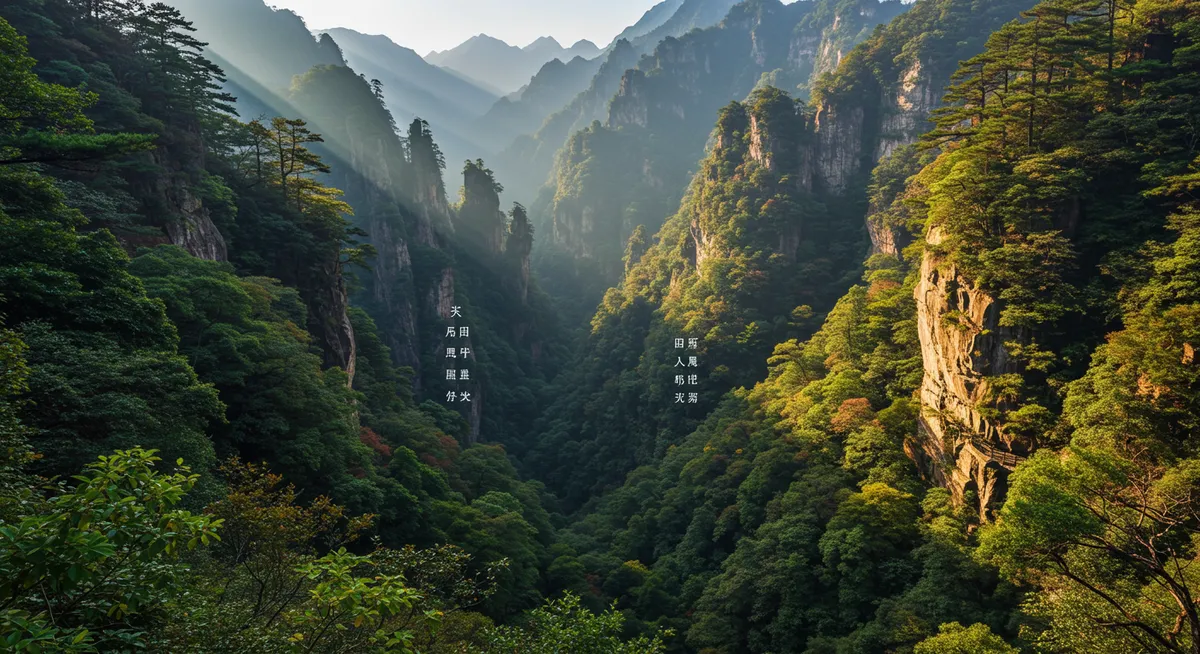
Choose Jufeng for sustained stairs and high viewpoints, Jiushui (often called Beijiushui) for a stream-and-valley walk, Taiqing for Taoist heritage with coastal and hillside options, or Yangkou for rocky scenery, Taiping Palace and a more compact east-side climb. These are separate official touring zones with different entrances and transport. Do not arrive with a generic “Laoshan” ticket or map and assume every route connects.
Direct answer: Jufeng is the strongest hiking choice, Jiushui is the best water-and-shade choice, Taiqing is the best culture-first choice, and Yangkou combines coastal rock scenery with Taiping Palace. This guide compares the zones; use the first-visit Laoshan day-trip guide for city-to-mountain logistics and a complete day plan.
Laoshan Route Comparison at a Glance
Turn this guide into a personal route with our free Qingdao itinerary planner.
| Official zone | Primary character | Walking pattern | Best suited to | Important limitation |
|---|---|---|---|---|
| Jufeng 巨峰游览区 | High granite landscape and viewpoints | Long stair ascent plus an optional high circuit; cableway may reduce part of the climb | Fit walkers who prioritize elevation and open views | The public route is not a promise of access to the surveyed summit |
| Jiushui 九水游览区 | Forested valley, pools and seasonal water | Progressive out-and-back or extended valley walk on constructed paths and steps | Photographers, families with capable walkers and hot-weather visitors | Water volume and path conditions depend on recent weather |
| Taiqing 太清游览区 | Taoist heritage, coast and optional hillside route | Lower coastal walking or a steeper temple-and-waterfall option; cableway may form part of some plans | Culture-first visitors and mixed-interest groups | Not every sight lies on one simple trail |
| Yangkou 仰口游览区 | Rock formations, sea-facing slopes and Taiping Palace | Steps, steep sections and optional cableway; cave or confined passages may affect the route | Visitors wanting a compact scenic climb with cultural stops | Road, capacity and cableway controls can change the practical day |
Taxonomy correction: Taiping Palace is a sight within Yangkou, not a standalone scenic zone equivalent to Jufeng or Jiushui. Current official maps separately list Jufeng, Taiqing, Yangkou, Huayan and Jiushui. Older English pages may call Jiushui “Beijiushui” and may describe route groupings differently.
Jufeng: Choose It for the Strongest Climbing Day
Jufeng is the best match for travelers who want repeated ascent, granite scenery and the most mountain-focused of the official visitor routes. Current official guidance routes visitors from the Dahedong service center by scenic shuttle to Tiandi Chunhe Square, then offers a choice of walking or using the Jufeng cableway before continuing toward signed gates, inscriptions and Lingqi Peak.
The important distinction is between the Jufeng touring area and the mountain's exact highest point. Official recommended routes describe an elevated circuit around the massif and named viewpoints; they do not guarantee that a visitor can stand on the surveyed summit. Respect closed paths and barriers even if a user-recorded map shows a line continuing beyond them.
Who Jufeng suits
- Walkers comfortable with sustained stone steps and long descents
- Travelers who will accept poor visibility as a possible outcome
- Visitors able to turn back if cableway service stops or the high circuit closes
- People prioritizing the walking experience over temples or waterfalls
How to plan Jufeng without invented mileage
Do not use a fixed distance from a blog unless it states exactly where tracking began, which side paths were included and whether a cableway was used. At the entrance, photograph the current official map and confirm which high-circuit sections are open. Ask staff for the last scenic shuttle and cableway operation before climbing; those times can differ from the general scenic-area closing time.
Set a turnaround point based on your usable walking window, not a promised “four-hour summit.” Keep at least half of that window for the return and transport buffer. Descending stairs can take tired knees longer than the ascent, particularly when surfaces are wet or crowds force a slower pace.
Jiushui or Beijiushui: Choose It for Valley Scenery
The official site now labels this zone Jiushui, while English maps and reviews often use Beijiushui. Its appeal is the sequence of forest, granite pools, narrow valley scenery and Chaoyin Waterfall rather than a summit objective. Official route guidance names the boardwalk, Jiushui Shibatan, Lengcui Gorge and Chaoyin Waterfall, with an optional continuation toward Weizhuguan when open.
Jiushui is sometimes marketed as the “easy” Laoshan route. That description is relative, not an accessibility guarantee. Constructed stone paths can have irregular steps, wet patches and prolonged walking. Waterfall flow also changes with rainfall and season, so no honest guide can promise full cascades on a specific date.
Who Jiushui suits
- Visitors who prefer shade, streams and close-up scenery to exposed viewpoints
- Photographers willing to adapt to water level, crowds and light
- Families whose children can manage steps and a sustained return walk
- Walkers who want several natural turnaround points instead of one summit goal
How to set a Jiushui turnaround
Treat each signed pool, gorge or waterfall as a decision point. Continue only while the whole group still has enough energy and dry-weather margin to reverse the same route. Do not enter streams, scramble around barriers or follow informal shortcuts to improve a photo; official safety notices tell visitors to stay out of river channels, hazardous areas and non-open zones.
Recent rain may improve water flow but also increases slip risk and can trigger controls. Heavy rain, flooding, ice or maintenance can shorten or close the route. Check the official notice feed before leaving Qingdao and again at the Jiushui transfer center.
Taiqing: Choose Culture First, Then Add Walking
Taiqing is the most flexible zone for travelers who want Taoist history and mountain-coast scenery without making a high circuit the sole purpose of the day. Official 2026 guidance shows a lower route from the Dahedong visitor center by scenic shuttle to Bashuihe, then along the coastal boardwalk toward Taiqing Palace. It also shows a more demanding option linking Bashuihe, Longtan Waterfall, Shangqing Palace, Mingxia Cave, the Taiqing cableway area, Laozi Road and Taiqing Palace.
These should be treated as different commitments. The lower heritage-oriented outing may suit a mixed group; the hillside sequence adds stairs and operational dependencies. Confirm whether admission to individual cultural sites, scenic transport and any cableway are included in the ticket you are buying.
Who Taiqing suits
- Travelers more interested in Taoist heritage than reaching a high point
- Mixed groups that want a lower route with optional additional climbing
- Visitors who value coastal scenery even if cloud covers the upper mountain
- People willing to choose between the boardwalk and hillside route rather than force both
Temple and religious spaces require quiet, respectful behavior. Follow posted photography rules, do not block worshippers and treat ceremonies as religious practice rather than a performance.
Yangkou: Taiping Palace, Rock Scenery and Steeper Choices
Yangkou is the correct official zone for Taiping Palace. Current official guidance also identifies rock features, Shizi Peak, the “Shou” character cliff, Mitian Cave and Tianyuan among its sights, with walking and cableway choices. That combination makes Yangkou attractive to visitors who want culture and dramatic terrain in a more concentrated area.
Compact does not mean universally easy. Steps, exposed rock, narrow passages and queues can change the effort. A cave or upper path may be restricted for safety, maintenance or crowd control. Never build the visit around a single confined feature without checking its status at the entrance.
Who Yangkou suits
- Visitors interested in Taiping Palace and east-side coastal scenery
- Confident stair walkers who prefer a shorter-feeling mountain zone
- Travelers prepared to skip a cave or upper section if staff close it
- People staying east of central Qingdao or combining Yangkou with nearby areas cautiously
Yangkou road access can be managed during busy holidays. The official route advice currently favors public transport, but bus connections and road controls can change. Recheck the latest notice rather than copying a fixed bus timetable.
Access and Transfers for Each Laoshan Zone
| Zone | Current official public-transport framework | Final step |
|---|---|---|
| Jufeng | Qingdao Metro Line 4 to Dahedong, Exit A | Enter the Dahedong service center and use the Jufeng scenic shuttle |
| Taiqing | Qingdao Metro Line 4 to Dahedong, Exit A | Enter the same service center but board transport marked for Taiqing |
| Jiushui | Blue Valley Express to Beijiushui, Exit B | Use the Jiushui transfer center and scenic shuttle |
| Yangkou | Blue Valley Express to Puli, Exit A, then an official listed bus connection | Walk to the current Yangkou visitor-service entrance or follow staff routing |
This is a framework, not a timetable. Confirm the route in the official Qingdao Metro journey planner and Laoshan notice feed on the day. The Qingdao transport guide explains the wider network, while the official scenic-area source remains decisive for the final shuttle.
Tickets, Reservations, Shuttles and Cableways
Laoshan currently uses real-name online reservations. The official 2026 peak-season notice says booking opens seven days ahead and capacity limits can stop sales. Reserve the exact zone, enter passport details exactly as required, carry the original identification used and verify the booked entry window.
A scenic-area ticket does not automatically answer every transport question. Check whether the selected product includes the zone admission, scenic shuttle, cableway, temple admission or other separately operated component. Do not infer that a return cableway ride is available merely because an uphill ride is on sale.
Opening hours change by season, holiday and weather. Cableways are especially sensitive to wind and thunderstorms, and individual zones may reach capacity while others remain bookable. Check the official announcement list and service notice on the morning of travel.
Navigation Without Fabricated GPX Files
This page does not provide GPX downloads. The previous version claimed downloadable tracks, waypoints, evacuation routes and coordinates without linking to verifiable files. Those claims have been removed. A user-recorded GPS line can also cross a closed section, begin before the official entrance or reflect conditions that no longer exist.
- Select the official zone first. Save its Chinese name and the correct visitor center.
- Open the official route map. Screenshot it for offline reference, but recheck it at the entrance.
- Confirm open segments. Ask staff which paths, shuttles and cableways operate that day.
- Photograph the entrance map. Include the “you are here” point, exits and staff or service points.
- Follow physical signs and barriers. A phone map is secondary to current on-site controls.
- Record your own return. Pin the transfer center and photograph the stop or boarding sign.
If using an offline mapping app, treat it as orientation rather than authority. Do not follow an unverified path simply because it appears on a crowdsourced map. Mobile coverage and battery life can fail, so keep the ticket, zone name and return instructions available offline.
Weather, Closures and Turnaround Rules
- Thunder or lightning: do not continue to exposed viewpoints; follow staff instructions and shelter guidance.
- High wind: expect cableway suspension and possible high-route restrictions even if lower areas remain open.
- Heavy rain: Jiushui water may look better, but stream channels, granite and steps become more hazardous.
- Snow or ice: a scenic zone may open later, partially open or remain closed after the city below appears clear.
- Fog: Jufeng may still offer an atmospheric walk, but it cannot deliver guaranteed sea views.
- Heat and humidity: shorten the climb, increase rest and do not rely on every kiosk being open.
Turn back when the group reaches half its usable walking window, when conditions worsen, when a member's balance or knees deteriorate, or when staff announce a transport cutoff. Do not let a cableway ticket, photo target or downloaded track override those signals.
Accessibility, Children and What to Carry
None of these zones should be assumed step-free. A paved scenic path can still contain long staircases, steep ramps, narrow gates or uneven stone. Before booking, call the scenic-area service line with the exact zone and mobility device. Ask how far a wheelchair user can travel from the shuttle, whether accessible toilets are open and whether cableway boarding requires transfers or steps.
For children, choose the turnaround before starting and keep them out of stream channels and beyond barriers. Yangkou's narrow features and Jufeng's long stair sections may not suit every child. Jiushui may feel gentler, but the return walk still matters.
Wear shoes with reliable wet-surface grip and carry weather layers, water appropriate to the forecast, essential medication, sun or rain protection, a charged phone, a power bank and the original booking identification. A headlamp is sensible only as an emergency backup; it is not permission to remain after operating hours.
Can You Combine Two Laoshan Zones?
Combining zones is possible only when the ticket, transport and live operating day support it, but it often weakens the walking experience. Jufeng and Taiqing share the Dahedong service-center framework, yet each deserves its own time. Jiushui uses a different northern transfer system. Yangkou lies on the eastern approach and is affected by separate road and bus conditions.
For a first visit, choose one primary zone and one optional lower-effort extension inside that same zone. Treat a second zone as a bonus that can be dropped. The Qingdao itinerary hub helps decide which day to reserve for Laoshan; travelers who prefer a shorter urban hike can compare the Fushan hiking guide.
Build a Laoshan Day Around One Official Zone
Choose Jufeng, Jiushui, Taiqing or Yangkou first, then build transport and backup plans around the same entrance instead of mixing incompatible route descriptions.
Frequently Asked Questions About Laoshan Trails
Should I choose Jufeng or Beijiushui?
Choose Jufeng for sustained stairs, high granite scenery and viewpoints. Choose Jiushui, commonly called Beijiushui, for forest, pools and seasonal waterfalls. Both require walking fitness, but their scenery and access systems differ.
Can visitors climb to the actual summit of Jufeng?
Do not assume so. The official visitor route describes signed gates, viewpoints and an elevated circuit around the massif, not guaranteed access to the surveyed highest point. Follow current signs, barriers and staff instructions.
Is Taiping Palace a separate Laoshan hiking area?
No. Taiping Palace is within the official Yangkou touring zone. Taiqing is a separate southern zone centered on Taoist heritage, coastal walking and optional hillside routes.
Do I need a GPX file to hike Laoshan?
No. Select an official zone, save its official map, photograph the entrance map and follow open, signed paths. Crowdsourced tracks can be outdated or cross closed and non-public areas, so they should never override on-site controls.
Do Laoshan cableways operate every day?
No operation should be assumed. Wind, thunderstorms, maintenance, capacity and seasonal schedules can suspend or shorten service. Confirm the specific Jufeng, Taiqing or Yangkou cableway on the official notice feed and again at the entrance.
Do I need to reserve a Laoshan hiking zone?
Yes, current official guidance uses real-name online reservations and says the booking window opens seven days ahead in the 2026 peak season. Capacity can sell out, so reserve the exact zone and recheck current rules.
Which Laoshan route is easiest?
A lower Taiqing culture-and-boardwalk plan may require less climbing than Jufeng, while a shortened Jiushui walk offers flexible turnaround points. Neither is automatically step-free; confirm current surfaces and access for your group.
Is Jiushui better immediately after rain?
Recent rain may increase stream and waterfall flow, but it also raises slip, flooding and closure risk. Check official notices and never enter a water channel or closed section for a better view.
Official Sources for Route and Operating Checks
- Laoshan Scenic Area official touring-zone maps
- Official 2026 peak-season reservation and operating notice
- Official 2026 access guidance by touring zone
- Official 2026 Jufeng, Taiqing, Yangkou and Jiushui route descriptions
- Official 2026 Jufeng and Taiqing recommended routes
- Laoshan official announcements and capacity notices
Last checked: July 31, 2026. Paths, reservations, scenic shuttles and cableways may change with weather, maintenance and capacity. The official map, current notice and on-site staff take priority over this guide.