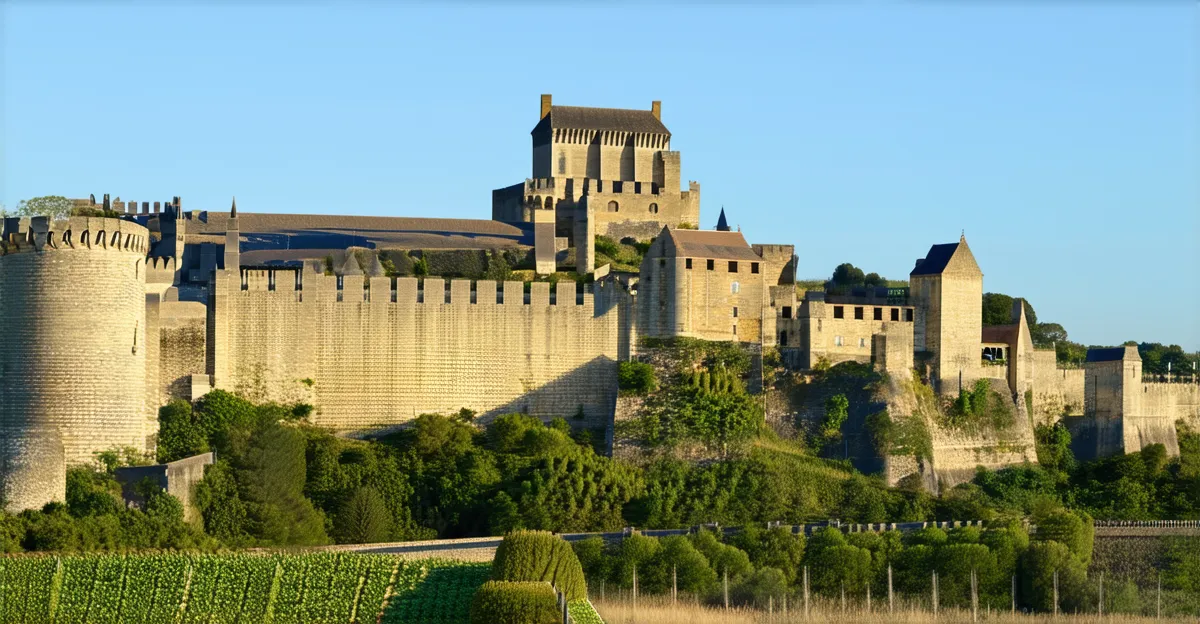
A third day should expand the trip, not repeat the same Cité loop. Give the first two days to historic Carcassonne, then choose one excursion according to weather, transport and interests.
This page replaces the former five-day itinerary. Five nights can work as a regional base, but it is not a distinct city itinerary and should be built around several separately researched Aude excursions.
Day 1: The Cité in Depth
Turn this guide into a personal route with our free Carcassonne itinerary planner.
Walk the public lices and lanes early, take the booked Château Comtal circuit, then spend time around the basilica and the western viewpoints. Use the UNESCO context to understand how nineteenth-century restoration shaped what visitors see. Avoid claiming that every wall is original medieval fabric or that all ramparts belong to the free public route.
Day 2: Bridge, Bastide and Canal
Cross Pont Vieux, photograph the fortress from below and follow the Bastide grid toward Place Carnot. Continue to the station and Canal du Midi. This day works without paid admission and can absorb a slower lunch, market visit when the official calendar confirms it, or an indoor break during bad weather.
Day 3: Choose One Excursion
| Choice | Best for | Critical check |
|---|---|---|
| Lac de la Cavayère | Nature and a short transfer | Heat, fire risk and seasonal activities |
| Lastours | Castle landscape and hiking | Live opening and trail conditions |
| Limoux | Small-town food and wine | Return transport and responsible tasting |
| Narbonne | Rail-friendly urban contrast | Live train times |
Why the Plan Stops at Three Days
Four or five days can be excellent, but the itinerary becomes an Aude or Occitanie road trip. Do not commute from Carcassonne merely to preserve one hotel if another base reduces travel. For a longer stay, alternate demanding heritage days with gentler lake, canal or food-focused time and verify every external attraction independently.
Planning the whole trip? Compare routes and trip lengths in the Carcassonne itinerary hub.
Current Visitor Facts to Build Around
The public medieval Cité is free and open 24/7; individual shops, restaurants and religious interiors keep their own schedules. Château Comtal and its adjoining rampart circuit are separate: the official 2026 individual price is €19 in April–September and €13 in October–March. Normal monument hours are 10:00–18:30 in April–September, with last admission at 17:30, and 09:30–17:00 in October–March, with last admission at 16:00. It normally closes January 1, May 1 and December 25.
The station-to-Cité walk is about 30 minutes under official tourism guidance. Medieval cobbles, slopes and stairs can make short map distances slower. The paid rampart route is not wheelchair accessible; only the Château barbican and main courtyard form the official reduced-mobility visit. Recheck the live source affecting your date before paying or departing.
Frequently Asked Questions
Is three days enough for Carcassonne?
Yes. It covers the Cité, Bastide and one meaningful excursion without excessive repetition.
What is the best third-day trip?
Choose by interest and conditions: the lake for nature, Lastours for hiking and castles, Limoux for food, or Narbonne for a rail-friendly city.
Do you need a car for three days?
Not for Carcassonne itself. A car broadens day-three choices, while Narbonne and some other towns can work by live rail schedules.
Where should you stay for three nights?
Choose the Cité for atmosphere, the Bastide for station and dining access, or Rue Trivalle as a walking compromise.
Official Sources to Check Before You Go
- Carcassonne Tourism: Medieval City visitor guide
- Château Comtal and ramparts: official practical information
- Carcassonne Tourism: Lac de la Cavayère
Admission, opening, transport, parking, restaurant and weather details can change. Recheck the official source that controls your travel date rather than relying on a copied schedule or price.