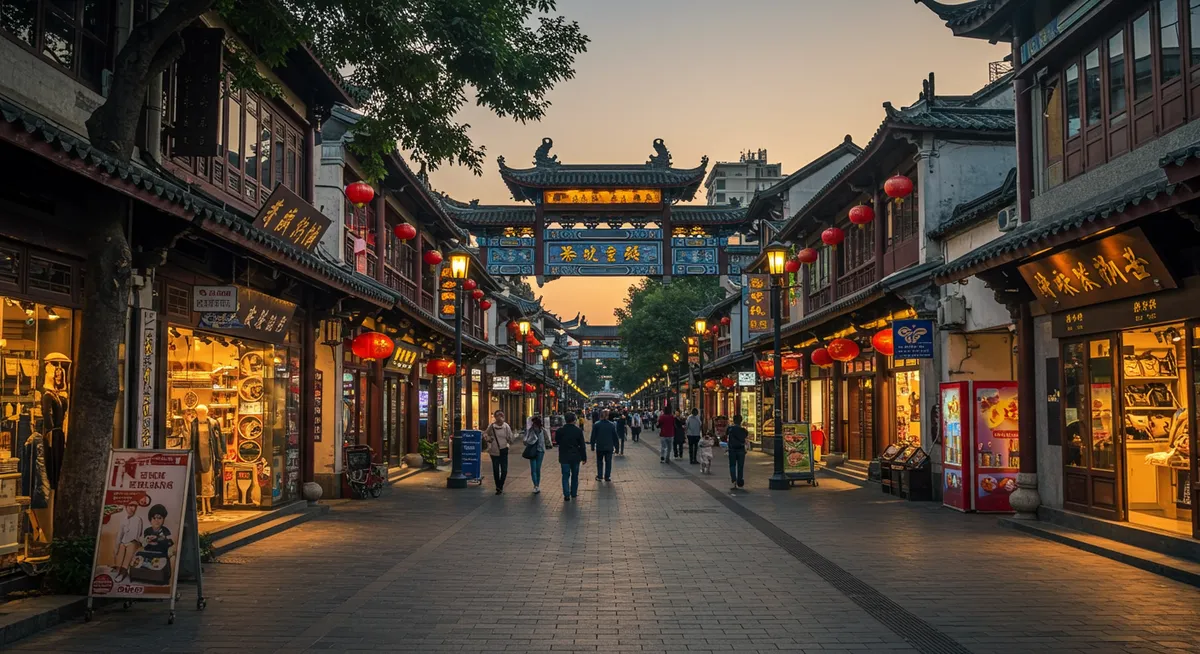
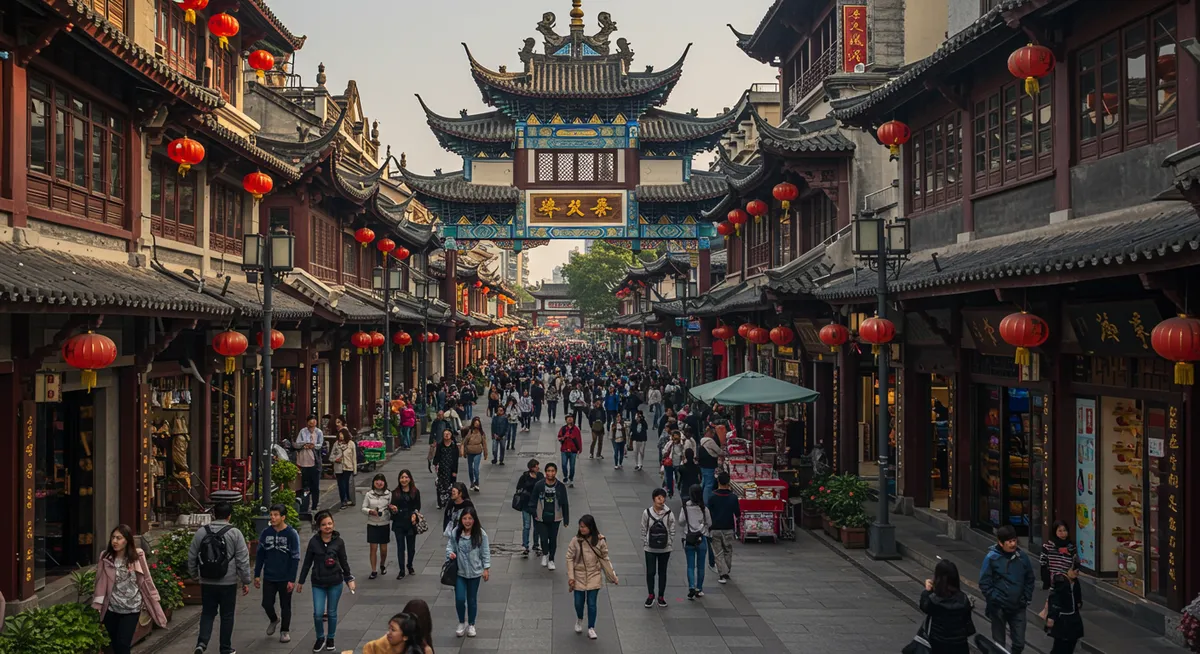
Beijing Road Guangzhou shopping is best understood as a city-center experience rather than a single mall or bargain market. The pedestrian district combines mainstream retail, Cantonese food, historic arcades, a working Buddhist temple, and ancient road surfaces displayed beneath glass. It is especially useful for first-time visitors who want shopping and sightseeing in one compact stop.
This 2026 guide explains which metro station to use, what the area is good for, how to walk the district without backtracking, and which details should be checked on the day. Store tenants, restaurant queues, promotions, and business hours change, so the route focuses on dependable landmarks rather than a brittle list of supposedly “best” shops.
Key Takeaways
Turn this guide into a personal route with our free Guangzhou itinerary planner.
- Best for: an easy mix of retail shopping, snacks, evening atmosphere, and historic sights.
- Not best for: specialist wholesale sourcing or a quiet heritage walk.
- Closest metro: Beijing Lu Station on Line 6 serves the southern part of the district; Gongyuanqian on Lines 1 and 2 is useful for a north-to-south walk.
- Allow: about two hours for a focused walk or half a day when adding a meal, Dafo Temple, and serious browsing.
- Do not miss: the glass-covered ancient road remains in the central section.
- Plan around: heavier evening and weekend crowds, changeable shop hours, and mobile-first payments.
Is Beijing Road Worth Visiting?
Beijing Road Pedestrian Street is worth visiting when you want Guangzhou’s historic center, everyday retail, and food in the same outing. It is less compelling if your only goal is luxury shopping, wholesale purchasing, or an uncrowded old-town atmosphere. In those cases, a purpose-built mall, a specialist market, or a Liwan heritage route may fit better.
The street’s value comes from its layers. Guangzhou’s government identifies Beijing Road as a national demonstration pedestrian street and a national 4A tourist area, while the surrounding protected district includes traditional commercial buildings and archaeological sites. The result is commercial, not museum-quiet, but the history is not merely decorative.
How Long Is Beijing Road?
Online guides often quote roughly 1.4–1.5 kilometers because they describe Beijing Road as a whole. Official pedestrian-management figures use a different boundary: the managed main street was extended to about 960 meters, while connected side streets brought the district’s total pedestrian network to about 4.7 kilometers. For trip planning, think of a walkable shopping district with one central spine—not one uninterrupted 4.7-kilometer shopping avenue.
Who Will Enjoy It Most?
- First-time visitors: the ruins, food, retail, and metro access create an efficient introduction to central Guangzhou.
- Families: the pedestrianized core removes most through traffic, although evening crowds can make strollers slower to maneuver.
- Food-focused travelers: the district is a convenient place to compare snacks, desserts, casual meals, and Cantonese restaurants.
- Dedicated shoppers: it works for mainstream brands and casual browsing, but buyers seeking wholesale volume should research Guangzhou’s specialist market districts instead.
How to Get to Beijing Road Pedestrian Street
Use Beijing Lu Station on Metro Line 6 for the southern end, or Gongyuanqian Station on Lines 1 and 2 for the northern side. This two-station setup makes a one-way walk easy: arrive at Gongyuanqian, walk south through the shopping district, and depart from Beijing Lu without retracing the full route.
Beijing Lu Station: Best for Direct Access
Beijing Lu Station has A1, A2, and B exits. An official Guangzhou transport update places A1 on the east side of Beijing Road, B on the north side of Wanfu Road, and A2 on the south side of Taikang Road with direct access to the adjoining Yuehai Tianhe City complex. Exit works can temporarily change the most convenient path, so follow the station signs rather than relying on an old screenshot.
Gongyuanqian Station: Best for a North-to-South Route
Gongyuanqian is the useful alternative when you are arriving on Line 1 or Line 2. It serves the northern part of the commercial area and suits an itinerary that approaches from Yuexiu Park or the Sun Yat-sen Memorial Hall area. Use a current map app for the final walk because exit numbering and street-level diversions can change.
Taxi or Ride-Hailing
Set the destination as Beijing Road Pedestrian Street (北京路步行街) and choose a drop-off point near the end you want to explore. Vehicles cannot use the pedestrianized core, so a driver may stop on a surrounding road. Confirm the pin before the ride; “Beijing Road” can otherwise refer to a broad stretch rather than the specific walking area.
For line changes, airport connections, last-train checks, and station navigation, use our current Guangzhou Metro guide.
A Practical Beijing Road Walking Route
This self-guided route runs roughly north to south and takes two to four hours depending on shopping and meal stops. It prioritizes landmarks that are unlikely to disappear when individual tenants change.
1. Start Near Gongyuanqian
Approach the street from the Zhongshan Road side and orient yourself before entering the busiest blocks. The northern approach gives you a gradual transition from the civic center into the commercial area and makes the ancient road displays a natural midpoint rather than an out-and-back detour.
2. Pause at the Ancient Road Displays
Look for the protected remains beneath glass in the central section. Guangzhou’s cultural-heritage field archive records 11 road surfaces spanning five historical periods from the Tang era through the Republic of China. The city’s preservation plan identifies the ancient road and its display setting as a core part of the protected historic district.
The displays are easy to pass when the pavement is crowded. Slow down around the interpretive panels, keep the glass clear for other visitors, and avoid treating the archaeological area as only a photo prop. Daylight makes details easier to study; evening lighting produces a more dramatic contrast with the modern shopfronts.
3. Browse the Central Retail Blocks
Use the middle of the route for comparison shopping. Department stores and mall units are the simplest places to find fixed-price fashion, beauty products, sportswear, and recognizable brands. Smaller street-level shops can be better for inexpensive accessories, stationery, character goods, and souvenirs, but quality and return terms vary more.
4. Detour to Huifu East Road and Dafo Temple
Huifu East Road is useful for food stops and leads toward Dafo Temple, a functioning religious site beside the shopping district. The temple traces its origins to the Southern Han period and remains a protected historic place. Enter quietly, follow posted photography rules, and check the official visitor notice for current access rather than assuming the temple keeps retail hours.
5. Finish Near Beijing Lu Station
End around Taikang Road and Beijing Lu Station. From here, either leave on Line 6, continue toward Haizhu Square, or walk to the Pearl River waterfront. If you are considering an evening sailing, verify the departure wharf first with our Pearl River night cruise guide; Guangzhou cruises do not all use the same pier.
Beijing Road Shopping Guide: What to Buy
Beijing Road works best for retail browsing, not industrial-scale bargain hunting. Its advantage is choice in a central, walkable setting. The right shopping strategy depends on whether you value recognizable brands, a low purchase price, or a Guangzhou-specific gift.
| Shopping Goal | Where to Look | What to Check |
|---|---|---|
| Branded fashion and beauty | Department stores and mall complexes | Official receipt, return period, accepted payment method |
| Budget accessories and casual fashion | Smaller street-level shops and side streets | Seams, sizing, material, exchange policy before paying |
| Character goods and stationery | Lifestyle stores and mall units | Licensing, packaging condition, airline luggage limits |
| Food gifts | Established food retailers and bakery counters | Expiry date, sealed packaging, customs rules at home |
| Traditional-style souvenirs | Cultural shops around the historic district | Material claims, fragility, whether an item is a modern reproduction |
Malls Versus Small Shops
Choose malls when you want air-conditioning, clearer prices, receipts, and a more predictable return process. Choose smaller shops when browsing itself is part of the experience and you can inspect the item carefully. A polished storefront does not guarantee that an item is locally made, while a low price does not automatically mean a bargain.
Can You Bargain on Beijing Road?
Do not assume bargaining is universal. Department stores, chain retailers, convenience stores, and most mall units use fixed prices. An independent seller may offer a promotion or small discount, but ask politely before negotiating. Confirm the final price and contents before payment, and avoid opening sealed goods unless staff approve.
Retail Street or Wholesale Market?
Beijing Road is a convenient sightseeing-and-shopping district for individual purchases. Travelers buying clothing, leather goods, electronics, or accessories in bulk should not treat it as a substitute for a specialist Guangzhou market. Wholesale districts require separate research into opening days, minimum quantities, quality control, shipping, and business payment terms.
What to Eat Around Beijing Road
The area is useful for sampling Cantonese food because it combines quick snacks, bakeries, dessert shops, casual restaurants, and established dining brands. Tenant lists change, so choose by the dish and current hygiene cues rather than traveling for one viral storefront.
Good First Choices
- Cheong fun: steamed rice noodle rolls served with a savory sauce; fillings vary by shop.
- Wonton noodles: a light, practical meal between shopping stops.
- Double-skin milk or sweet soup: a classic Cantonese dessert break.
- Roast meats: useful for a more substantial rice or noodle meal.
- Dim sum: better treated as a seated meal than a checklist of isolated snacks.
For dish names, ordering strategy, tea etiquette, and how to judge a current restaurant choice, see our Guangzhou dim sum guide and Cantonese food guide.
How to Avoid an Unnecessary Queue
Popular restaurants can be busiest around standard lunch and dinner periods. Check the live queue in the restaurant’s booking app or at the host stand before committing. If one outlet is overwhelmed, compare nearby branches or eat slightly earlier; the district’s density makes flexibility more useful than a rigid restaurant list.
Best Time to Visit Beijing Road
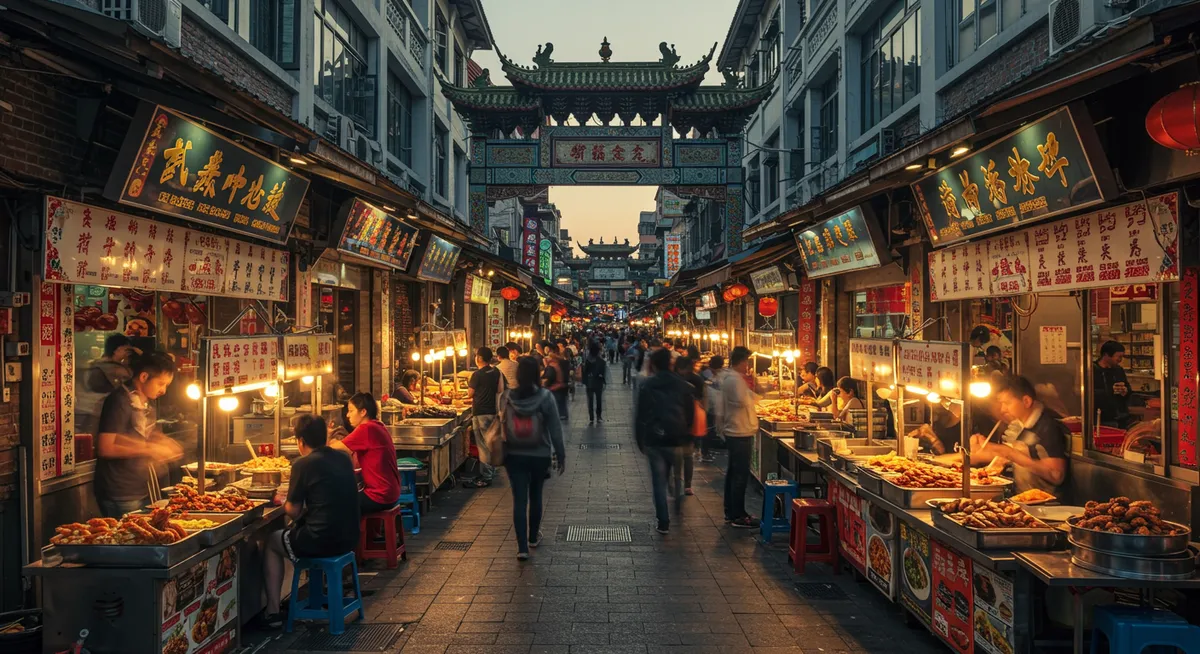
Visit on a weekday morning for easier walking, or from late afternoon into evening for the fullest atmosphere. Mornings favor history, photography, and unhurried shopping. Evenings favor illuminated shopfronts, Dafo Temple views, dinner, and a possible riverfront extension. Weekends and public holidays bring more energy but also slower movement and longer restaurant queues.
Weather Strategy
Guangzhou can be hot, humid, and rainy. On a warm day, alternate outdoor blocks with malls and a seated food stop. During heavy rain, use covered arcades where available, watch for slippery pavement near the glass displays, and avoid building a minute-by-minute schedule. Check the local weather alert before leaving during the summer storm season.
Are There Fixed Opening Hours?
The pedestrian street is a public district, but shops, malls, temples, restaurants, and attractions set their own operating times. Do not treat one generic “Beijing Road opening time” as the schedule for every venue. Check the same-day listing or official account for any business that matters to your plan, especially around holidays.
Practical Shopping and Payment Tips for 2026
Set Up More Than One Payment Option
Mobile payment is widely used. China’s official payment guide for overseas visitors explains options including Alipay, Weixin Pay, bank cards, and cash. Link and verify a supported international card before the shopping day, but carry a backup payment method in case a small merchant, card issuer, or app verification step causes trouble.
Ask for a Receipt and Check Returns Before Paying
For higher-value purchases, confirm the model, color, size, warranty coverage, and return terms before completing the transaction. Ask for the official receipt and keep the packaging until you know the item works. Cross-border card acceptance, refunds, and tax-refund eligibility depend on the merchant and current rules; verify them at the specific counter.
Use a Translation and Map App
Save the Chinese name 北京路步行街, your hotel address, and the metro station name offline. Translation apps help with ingredients, sizing, and return conditions, but do not use automatic translation as proof of an expensive product claim. Ask staff to write down any warranty or collection arrangement.
Manage Crowds Without Overreacting
Beijing Road is a busy urban shopping area. Keep your phone and wallet secure, agree on a meeting point if traveling in a group, and step away from the walking flow before checking directions. Families and travelers who need a slower pace will generally find mornings easier than weekend evenings.
How to Fit Beijing Road Into a Guangzhou Itinerary
Two-Hour Focused Visit
Arrive at Gongyuanqian, walk to the ancient road displays, browse one mall or department store, and finish at Beijing Lu Station. This version works when Beijing Road is one stop in a busy sightseeing day.
Half-Day Shopping and Food Plan
Start in the quieter late morning, inspect the ruins, browse both a mall and smaller shops, eat a Cantonese lunch or early dinner, and detour to Dafo Temple. Leave from Beijing Lu Station or continue toward the river.
Central Guangzhou Day
Pair Yuexiu Park in the morning with Beijing Road in the afternoon and evening. This keeps the day within central Guangzhou and avoids crossing the city repeatedly. Our three-day Guangzhou itinerary uses this sequence, while the Guangzhou itinerary hub helps you decide whether it fits a one-, three-, or five-day trip.
Ready to place Beijing Road in your route? Start with the Guangzhou itinerary planner, then reserve a flexible two- to four-hour block so shopping queues or a longer meal do not disrupt the rest of the day.
Frequently Asked Questions
What is Beijing Road Pedestrian Street famous for?
Beijing Road is known for combining retail shopping, Cantonese food, historic commercial architecture, Dafo Temple, and ancient road layers displayed beneath glass. Its main advantage is the ability to shop, eat, and see heritage sites in one central district.
Which metro station is best for Beijing Road Guangzhou shopping?
Beijing Lu Station on Line 6 is the closest choice for the southern part of the pedestrian district. Gongyuanqian on Lines 1 and 2 is useful for the northern side and for a one-way north-to-south walk.
How much time do you need at Beijing Road?
Allow about two hours for the central walk, ancient road displays, and limited browsing. Set aside half a day if you want a meal, Dafo Temple, multiple shopping stops, or an evening extension toward the Pearl River.
Is Beijing Road free to visit?
The public pedestrian street and outdoor ancient road displays do not require a general street-entry ticket. Individual venues, events, or activities may have their own rules, so check current notices for any specific stop.
What should you buy on Beijing Road?
Beijing Road is useful for mainstream fashion, beauty products, accessories, stationery, character goods, packaged food gifts, and modern souvenirs. Compare stores, check materials and return terms, and use specialist markets instead if your goal is wholesale buying.
Can you bargain at Beijing Road shops?
Prices are generally fixed in department stores, malls, chains, and convenience stores. Some independent sellers may offer a promotion or limited discount, but ask politely and confirm the final price before paying rather than assuming bargaining is expected everywhere.
Is Beijing Road better during the day or at night?
Daytime is better for studying the archaeological displays and walking with fewer crowds. Evening is better for illuminated streets, dinner, and a livelier atmosphere. A late-afternoon arrival offers a practical compromise between both experiences.
Should you choose Beijing Road or Shangxiajiu?
Choose Beijing Road for the ancient road displays, mixed modern retail, central metro access, and Dafo Temple. Choose Shangxiajiu when your day is centered on Liwan, traditional arcade streets, Yongqing Fang, or nearby heritage attractions. They serve different routes rather than being interchangeable copies.
Official Sources Used for This Guide
- Guangzhou Municipal Government: Beijing Road as a national demonstration pedestrian street
- Yuexiu District: pedestrian-area dimensions and management
- Guangzhou Cultural Heritage Bureau: archaeological field archive for the ancient road site
- Guangzhou transport update: Beijing Lu Station exits
- Yuexiu District: Dafo Temple visitor information
- State Council of China: payment service guide for overseas visitors