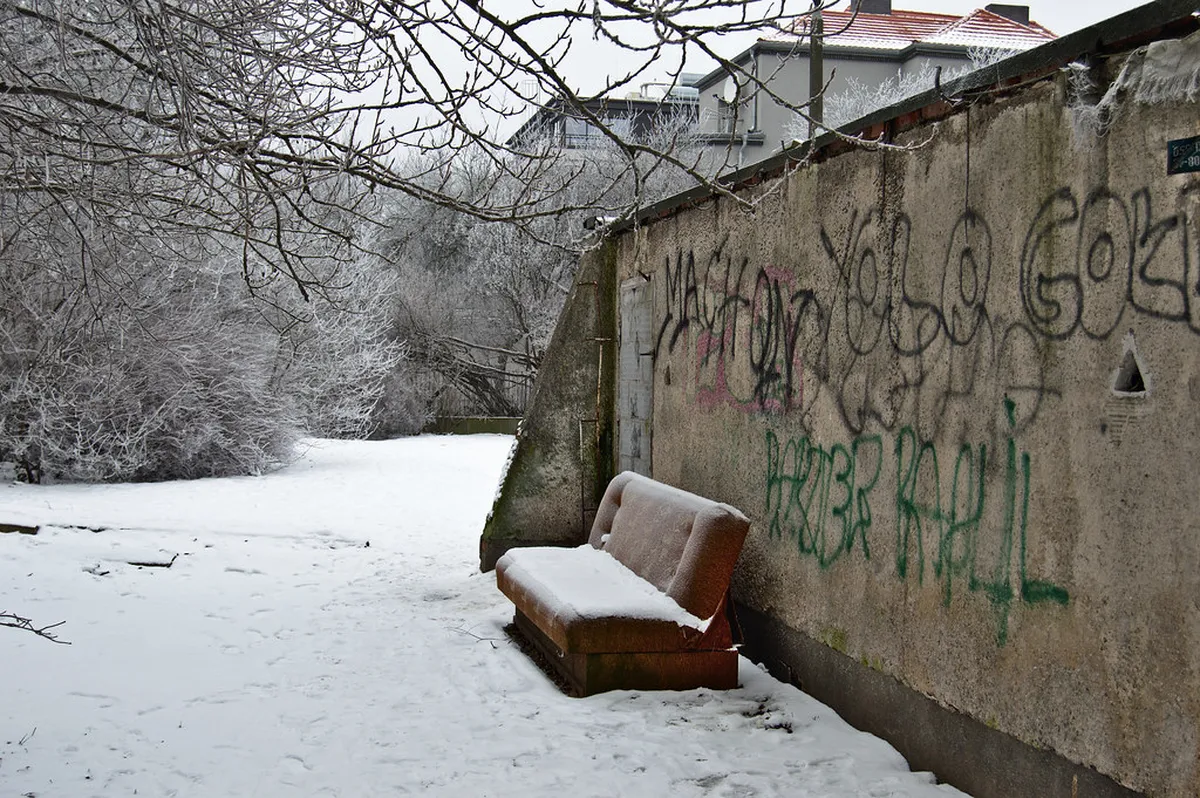
Poznań, Poland's vibrant hub, draws many to its beautiful Old Town. Yet, the city holds many secrets beyond its main square. This Poznań hidden gems guide unlocks unique experiences. You can uncover lesser-known attractions and local favorites. Prepare to explore Poznań like a true insider in 2026. Discover authentic charm and unforgettable moments. This guide will help you craft an unforgettable Poznań itinerary. You will see the city with fresh eyes.
Beyond the Old Town: Secret Alleys and Courtyards
Turn this guide into a personal route with our free Poznań itinerary planner.
The Old Market Square captures every visitor's attention. However, truly magical spots await just steps away. Dive into the charming backstreets of the city center. You will find quieter, historic courtyards.
Explore the district of Śródka, near Poznań's main attractions. This area feels like a village within the city. Its colorful murals and narrow streets invite exploration. Look for the 'Gateway to Poznań' Brama Poznania. It connects you to Ostrów Tumski, the Cathedral Island.
Venture into Chwaliszewo, a revitalized historic district. Once an island, it now boasts modern architecture. You will also find remnants of its shipbuilding past. It’s perfect for a leisurely walk. Discover small cafes and independent shops here.
Seek out the lesser-known corners of Jeżyce. This bohemian neighborhood offers beautiful tenement houses. Many feature unique architectural details. Its hidden courtyards often host small art installations. Take time to wander and get lost on purpose.
Art & Culture Off the Beaten Path in Poznań
Poznań's cultural scene extends beyond grand museums. Many smaller galleries showcase local talent. These spots offer a fresh perspective on Polish art. You can discover emerging artists.
Visit the Stary Browar Art and Business Centre. While known, its less-frequented art installations are hidden. Seek out the contemporary art exhibitions. They are often tucked away in less obvious spaces. This center combines shopping with modern art.
Explore the vibrant street art scene. Many murals adorn buildings in Jeżyce and Śródka. They tell stories of the city's past and present. A self-guided street art tour offers a unique experience. It is a fantastic way to see the city.
Consider a visit to the Museum of Applied Arts. It resides within the Royal Castle grounds. Focus on its innovative temporary exhibits. They often highlight unique aspects of Polish design. It's a peaceful alternative to larger, busier sites. This offers insider travel tips for your cultural journey.
For music lovers, discover independent music venues. They host local bands and experimental acts. Check local listings for smaller concerts. These offer a genuine taste of Poznań's nightlife. Many venues are in former industrial buildings. This provides a truly authentic vibe. Explore Poznań's best nightlife for these hidden gems.
Unique Culinary Delights: Poznań's Secret Eats
Beyond the famous St. Martin Croissant, Poznań has more to offer. Hidden eateries serve up authentic local flavors. Discover charming cafes and traditional milk bars. These are perfect for budget-friendly meals.
Seek out specific 'Bar Mleczny' (milk bars) for lunch. These institutions offer delicious, traditional Polish food. Prices are remarkably low, often just 15-30 PLN for a full meal. Try pierogi, bigos, or placki ziemniaczane. They provide a true taste of home cooking.
Explore the culinary scene in Jeżyce for something different. This district boasts independent restaurants and cafes. You will find diverse cuisines and cozy atmospheres. Many places focus on seasonal, local ingredients. This ensures fresh and flavorful dishes.
Look for regional specialties beyond the croissant. Try pyry z gzikiem, a Poznań potato dish. It features cottage cheese and chives. Many local pubs and restaurants serve it. It is a simple yet incredibly satisfying meal. You can find more details in our Poznań traditional food guide.
Visit smaller bakeries for unique pastries. They often bake regional variations of cakes and cookies. These charming spots provide a sweet escape. Enjoy a coffee with your treat. It’s a perfect way to experience local life.
Green Escapes: Parks and Nature Spots
Poznań offers many beautiful green spaces. Some provide peaceful retreats from city life. They are perfect for relaxation or a quiet stroll. Discover nature's calm in urban settings.
While Lake Malta is popular, explore its less-traveled paths. Head to the eastern side for quieter spots. You can rent a rowboat or enjoy the walking trails. It offers beautiful views without the crowds. Consider a bike ride around the lake.
Park Cytadela is a vast park built on former fortifications. Its main areas are well-known. However, seek out the hidden military cemeteries or quiet groves. They offer a somber, reflective atmosphere. Discover the Soviet Military Cemetery. This site holds significant historical weight.
Visit Rusałka Lake, a serene reservoir in the city's west. It’s less touristy than Malta Lake. The surrounding forests are ideal for hiking and cycling. It's a perfect spot for nature lovers. Enjoy the tranquility and fresh air. Public transport options can get you there easily.
Explore the Botanical Garden of Adam Mickiewicz University. It’s a peaceful oasis. Wander through diverse plant collections. Admission is free, making it a great budget option. It is a true hidden gem for plant enthusiasts. Take your time to enjoy the quiet beauty. This garden is a calm escape. Enjoy its beauty during your visit to Poznań in 2026.
Hidden History: Poznań's Untold Stories
Poznań's history runs deeper than its main square. Many lesser-known sites reveal fascinating past events. Uncover stories of resilience and change. These hidden gems offer profound insights.
Explore the remnants of Prussian fortifications. While Cytadela Park is famous, other segments exist. Some are overgrown or integrated into buildings. These offer glimpses into military history. Find them by wandering off main paths.
Visit the underground air raid shelters from WWII. Some tours offer access to these preserved bunkers. They provide a chilling look at wartime life. Check local tour operators for availability. It is a powerful, immersive experience.
Discover the history of the Imperial Castle. Beyond the main tour, look for specific exhibitions. They often focus on the castle’s later uses. It served various functions over the centuries. This offers a different historical perspective. Staying near the castle can make access easy.
Walk through the Jewish Quarter, now largely rebuilt. Look for plaques detailing its history. You can find the remnants of the synagogue. It is a poignant reminder of Poznań’s diverse past. This area holds powerful stories. Be respectful as you explore these historic grounds. You can also learn about safety for tourists while exploring.
Poznań's Neighbourhood Gems: Jeżyce, Śródka & Wilda
Locals rarely spend an afternoon on the Old Market Square if they can help it. Instead, they drift into three neighbourhoods that pulse with everyday life — each just 15–25 minutes on foot from the centre.
Jeżyce is Poznań's most creative district, packed with independent bookshops, vinyl record stores, and flat-white cafes on ul. Roosevelta and ul. Dąbrowskiego. The ornate pre-war tenement houses here survived the war largely intact, their stucco facades still showing hunting scenes and floral reliefs. Pick up breakfast at Rynek Jeżycki, a covered market hall where local farmers sell seasonal produce, smoked cheeses, and hand-rolled butter — arrive by 9 AM on Saturday to catch the best selection. The market is free to enter and perfectly encapsulates how Poznań residents actually shop.
Śródka sits on the eastern bank of the Cybina river, separated from the Old Town by a medieval bridge. It was its own village for centuries before being absorbed into the city. The 2016 National Geographic Traveler Mural — depicting a prince, a trumpeter, a cat, and a butcher — covers an entire tenement wall and was voted one of Poland's Seven New Wonders. Śródka's Bramka Gallery is a free open-air corridor of rotating local artwork between two tenement buildings at ul. Śródka 8; blink and you miss it. Cross the footbridge to Cathedral Island (Ostrów Tumski) directly from Śródka — no tram needed.
Wilda is Poznań's working-class south, now quietly gentrifying. Its centrepiece is ul. Wierzbięcice, lined with craft-beer taprooms and zero-waste grocers that opened in the last few years. The northern edge of Lake Malta is reachable from Wilda via a 10-minute stroll; this quieter western bank has shaded benches, anglers, and almost none of the summer crowds that cluster around the rowing stadium. Trams 6 and 18 connect Wilda to the centre in under 10 minutes.
Lesser-Known Museums & Unique Indoor Experiences
Three Poznań institutions deserve far more visitors than they receive.
The Enigma Museum (Muzeum Enigmy) tells the story of the Polish mathematicians — Marian Rejewski, Jerzy Różycki, and Henryk Zygalski — who cracked the German Enigma cipher in 1932, years before Bletchley Park. Most visitors to Poznań skip this entirely in favour of the Historical Museum of the City of Poznań, which is a shame: the exhibits include original cipher machines, hands-on decoding stations, and a timeline tracing how the intelligence reached Britain. It sits on ul. św. Marcin, a short walk west of the Old Town. Admission is around 15 PLN. For a fuller picture of Poznań's past, pair your visit with the nearby Poznań itinerary that covers Cathedral Island.
The Poznań Croissant Museum (Rogalowe Muzeum Poznania) at ul. Stary Rynek 41 is dedicated to the rogal świętomarcińskie — the St. Martin's Croissant — a pastry protected by EU Geographical Indication since 2008. The interactive 45-minute show lets you roll, fill with white-poppy-seed paste, and shape your own croissant, then take it home still warm. The tradition dates to 1891 and is uniquely Poznanite: these crescents are sold citywide only around St. Martin's Day (11 November) in traditional bakeries, but the museum bakes them year-round for visitors. Entry costs around 42 PLN with the baking workshop; book ahead via rogalowemuzeum.pl.
The Palm House (Palmiarnia Poznańska) at ul. Matejki 18 is one of the largest in Central Europe, housed in a century-old iron-and-glass pavilion. Its five climate zones — tropical rainforest, savanna, Mediterranean, succulent, and aquatic — shelter over 1,700 plant species. Admission is around 18 PLN and the site stays open late on Thursdays. It is a 10-minute walk from Stary Browar or reachable on tram 12. Unlike the Botanical Garden, the Palm House is open year-round, making it a reliable rainy-day escape that most tourists completely overlook. Learn more on the official Poznań tourism site.
Cytadela Park's Hidden Corners and Cemeteries
Most visitors who venture to Cytadela Park walk the main paths and leave. The park rewards those who dig deeper into its 89-hectare footprint atop Winiary Hill, a 20-minute walk north of the Old Market Square.
The park holds six distinct cemeteries, and the contrast between them is striking. The Cemetery of Soviet Heroes contains 5,830 Red Army soldiers — including 3,717 anonymous graves — who died liberating Poznań in early 1945. Rows of identical dark-granite markers stretch across a slope shaded by mature oaks. Adjacent but separate, the Poznań Commonwealth War Cemetery is maintained by the Commonwealth War Graves Commission and holds 479 British and Commonwealth soldiers: perfectly level white headstones, a Cross of Sacrifice, and year-round floral tributes from the British consulate. Visiting both side by side gives a quiet, unfiltered sense of the scale of urban combat in the Battle of Poznań.
Beyond the cemeteries, the park hides a small zoo (ZOO Cytadela) tucked into its eastern section — free to enter on weekdays and popular with families but almost invisible to short-stay tourists. The hilltop also has preserved segments of Prussian brick casemating, which you can peer into through iron grates. A terrace cafe at the summit offers unobstructed views south toward the Old Town skyline and the cathedral spires of Ostrów Tumski — arguably the best free viewpoint in the city. Buses 176 and 184 stop at the Cytadela entrance.
Where Locals Actually Go: Viewpoints, Courtyards & Street Art Routes
The single best viewpoint in Poznań that tourists skip is the upper terrace of the Citadel Park hilltop (see above). The second-best is the rooftop observation level of the Brama Poznania ICHOT (the Gateway to Poznań multimedia centre on ul. Gdańska), which frames a direct sightline across the Cybina river to the twin towers of Poznań Cathedral — the oldest cathedral in Poland, consecrated in 968. Entry to Brama Poznania is around 25 PLN; the multimedia exhibitions about the city's founding myth are unexpectedly engaging.
For courtyards, the block bounded by ul. Zamkowa, ul. Podgórna, and ul. 23 Lutego conceals a series of interconnected back-court passages once used by merchants. Push through any unlocked ground-floor archway between 8 AM and 6 PM: the interiors hold mosaic tile floors, Art Nouveau staircase railings, and hand-painted apartment numbering. No tour operates here — locals simply use it as a shortcut.
A self-guided street art route linking Jeżyce, Śródka, and Wilda takes around 90 minutes on foot or 40 minutes by bike (city bikes available at Nextbike stations throughout). Key stops: the Śródka National Geographic mural (ul. Śródka 4), the large abstract mural on ul. Dąbrowskiego 43 in Jeżyce commissioned by the city in 2022, and the Wilda wall on ul. Robocza 16 depicting the district's industrial shipyard heritage. None of these appear on standard tourist maps. Check what else to pair them with on a full day out.
Locals end evenings not at Old Town bars but in Jeżyce at small basement craft-beer spots or in Wilda's converted brewery spaces on ul. Robocza. Rynek Jeżycki by night becomes a weekend flea market where vinyl, vintage clothing, and handmade ceramics take over the stalls vacated by the day's produce sellers. It's free, informal, and entirely off the tourist radar — exactly the kind of experience that makes exploring Poznań beyond the main attractions map so worthwhile.
Frequently Asked Questions
What are some free hidden gems in Poznań?
Poznań offers several free hidden gems. You can explore the street art in Śródka and Jeżyce. Wandering the charming alleys of Śródka costs nothing. The Adam Mickiewicz University Botanical Garden is also free to enter. These locations provide unique insights into the city. Enjoy these spots for budget-friendly exploration.
How can I find authentic local experiences in Poznań?
Finding authentic local experiences means venturing off the main tourist path. Visit local markets like Rynek Jeżycki for fresh produce. Eat at a traditional Bar Mleczny for an affordable, local meal. Attend smaller, independent art gallery openings. Engage with locals in neighborhood cafes. Our Poznań travel tips offer more advice.
Is Poznań walkable for exploring secret spots?
Yes, Poznań is very walkable, especially its central districts. Many hidden gems are within easy reach of each other. Comfortable shoes are highly recommended. For longer distances, use Poznań's efficient public transport. Consult a Poznań attractions map to plan your walking routes effectively.
What is the St. Martin's Croissant and where can I try one?
The rogal świętomarcińskie (St. Martin's Croissant) is a Poznań-exclusive pastry protected by EU Geographical Indication. It is filled with white-poppy-seed paste, nuts, and dried fruit. Traditionally baked and sold citywide around St. Martin's Day (11 November), it is available year-round at the Poznań Croissant Museum at ul. Stary Rynek 41, where you can also join an interactive baking workshop for around 42 PLN. Specialist bakeries in Jeżyce sell certified versions daily. No visit to Poznań is complete without trying one.
Which Poznań neighbourhood is best for off-the-beaten-path exploration?
Jeżyce is the top pick for most visitors: it combines Poznań's best independent cafe scene, street art, a lively market hall (Rynek Jeżycki), and beautiful pre-war tenement architecture — all within a few blocks. Śródka is the best option if you want historic village atmosphere and quick access to Cathedral Island via footbridge. Wilda suits travellers who prefer a quieter, more residential feel with craft-beer bars and easy access to the uncrowded western shore of Lake Malta.
What is the best free viewpoint in Poznań?
The hilltop terrace of Cytadela Park offers the most dramatic free panorama in the city, looking south over the Old Town rooftops and the twin cathedral towers of Ostrów Tumski. The terrace is reached via a grand staircase at the summit of the hill and is accessible daily without charge. A small cafe at the top serves coffee and light snacks. For a framed river view of the cathedral, the observation terrace at Brama Poznania costs around 25 PLN and is worth it for the sightline alone.
Poznań is truly a city of contrasts and hidden treasures. Moving beyond the main tourist sites reveals its genuine spirit. This Poznań hidden gems guide helps you discover secret spots. You can experience the city's unique charm in 2026. Embrace the adventure and explore the unexpected. Start planning your next amazing journey. Discover the real Poznań waiting for you. Dive deeper into its rich culture.
Key Takeaways
- Venture beyond the Old Town for unique discoveries.
- Embrace local eateries for authentic, affordable flavors.
- Utilize Poznań's walkability to find hidden artistic and historical sites.